

Choosing the best sunglasses for men is no longer simply about finding a frame that looks good. Today, sunglasses need to balance eye protection, lens technology, comfort, durability, lifestyle, and personal style.
Whether you are looking for sunglasses for driving, a stylish pair for college, performance eyewear for cycling, or luxury sunglasses online, the right choice depends on much more than the colour of the lens.
A good pair should provide reliable UV protection, fit your face comfortably, suit your daily activities, and complement your personal style. In India, where bright sunlight, heat, dust and monsoon conditions can make eyewear work harder, choosing the right combination of frame and lens becomes even more important.
So, what actually makes a pair of sunglasses worth buying?
Let’s break it down.
What Makes the Best Sunglasses for Men?
Before choosing a particular style, consider five essential factors:
- UV protection
- Lens technology
- Frame material
- Fit and face shape
- Your lifestyle and intended use
A fashionable frame with poor UV protection is not a good investment. Similarly, technically excellent sports sunglasses may look out of place in a formal office environment.
The best sunglasses are therefore not necessarily the most expensive ones. They are the ones that provide the right combination of protection, performance, comfort and style for you.
What is UV400?
One of the most important terms you will encounter while shopping for sunglasses is UV400.
So, what is UV400?
UV400 refers to lenses designed to block ultraviolet radiation up to approximately 400 nanometres. In practical terms, properly made UV400 sunglasses are intended to provide broad protection against UVA and UVB radiation.
It is important to understand that lens darkness and UV protection are not the same thing. A very dark lens does not automatically mean better UV protection.
When choosing sunglasses, look for an explicit UV protection specification rather than judging protection by lens colour alone.
What is Polarized Lens?
Another frequently misunderstood term is polarization.
What is Polarized Lens?
A polarized lens contains a filter designed to reduce glare caused by reflected light. This can be particularly useful when light reflects from roads, water, vehicle surfaces or other bright surfaces.
That makes polarized sunglasses especially useful for:
- Driving
- Cycling
- Travelling
- Beach activities
- Outdoor sports
- Bike riding
- Long hours in bright sunlight
However, polarization and UV protection are different features. Polarization primarily addresses glare, while UV400 addresses ultraviolet protection.
For everyday outdoor use, a combination of UV400 + polarization can therefore be a very practical choice.
Polarized vs UV400: Which One Should You Choose?
This is one of the most common questions when buying sunglasses.
The answer is simple: you do not necessarily have to choose between them.
| Feature | UV400 | Polarized |
|---|---|---|
| Primary purpose | UV protection | Glare reduction |
| Blocks UV | Yes, when properly rated | Not inherently |
| Reduces reflected glare | No | Yes |
| Useful for driving | Yes | Excellent |
| Useful for outdoor activities | Yes | Excellent |
| Should you prioritize it? | Essential | Highly useful |
Therefore, when shopping for the best sunglasses for men, look for UV400 protection first, then consider polarization depending on your lifestyle.
Sunglasses vs Photochromic Glasses
Another interesting choice is sunglasses vs photochromic glasses.
Traditional sunglasses are designed primarily for bright outdoor conditions. Photochromic lenses, on the other hand, change their tint depending on light exposure.
Photochromic eyewear can be useful for people who frequently move between indoor and outdoor environments.
Sunglasses
Advantages:
- Consistent tint
- Wide range of fashion designs
- Excellent for bright outdoor conditions
- Available in polarized options
- Ideal as dedicated sun protection
Photochromic Glasses
Advantages:
- Adapt to changing light conditions
- Convenient for people moving indoors and outdoors
- Can reduce the need to switch eyewear
If your priority is fashion + strong outdoor performance, conventional sunglasses offer far more choice.
If convenience is more important and you regularly transition between different lighting conditions, photochromic eyewear may be worth considering.
What is TAC Lens?
What is TAC Lens?
TAC stands for Tri-Acetate Cellulose. TAC is widely used in polarized sunglasses because its construction works well with polarizing filters while allowing manufacturers to produce lightweight lenses.
TAC lenses are commonly found in everyday polarized sunglasses and can provide a good combination of:
- Light weight
- Polarization
- Good visual performance
- Affordability
However, lens quality depends on the overall manufacturing process, not simply the material name printed on a product page.
What is Nylon Lens?
What is Nylon Lens?
Nylon, or polyamide-based lens material, is valued in performance and premium eyewear for its combination of light weight, impact resistance, optical quality and design flexibility.
It can be particularly useful for sports and wraparound designs where the lens needs to accommodate more complex shapes.
ZEISS, for example, describes polyamide as offering optical clarity, lightweight comfort and design flexibility, while polycarbonate is particularly suited to impact-resistant sports eyewear.
What is Polycarbonate Lens?
What is Polycarbonate Lens?
Polycarbonate is a lightweight thermoplastic material known for its impact resistance. This makes it particularly relevant to sports and active eyewear.
For people looking for sunglasses for running, cycling, cricket or other high-movement activities, polycarbonate can be an attractive lens-material choice.
But remember: polycarbonate does not automatically mean polarized or UV400. These are separate characteristics that should be checked independently.
TAC vs Polycarbonate Lens
So, which is better: TAC vs Polycarbonate Lens?
Neither material is universally “better”. They are suited to somewhat different priorities.
| TAC | Polycarbonate |
|---|---|
| Commonly used in polarized sunglasses | Commonly used in sports/performance eyewear |
| Lightweight | Lightweight |
| Good choice for everyday polarized eyewear | Strong impact resistance |
| Often cost-effective | Excellent for active use |
| Popular for casual and driving sunglasses | Popular for sports and high-movement use |
If your priority is everyday polarized eyewear, TAC can be a sensible option.
If you need greater impact resistance for an active lifestyle, polycarbonate deserves serious consideration.
Glass Lens vs Polycarbonate Lens
The glass lens vs polycarbonate lens debate is another classic in eyewear.
Glass can provide excellent optical clarity and strong scratch resistance, but it is heavier and can be less suitable for active applications.
Polycarbonate is lightweight and highly impact-resistant, making it popular for sports and performance eyewear.
Choose glass when:
- Optical clarity is your priority
- Weight is less important
- You prefer traditional premium lens construction
Choose polycarbonate when:
- You are active
- You want lighter eyewear
- Impact resistance matters
- You need sports-oriented sunglasses
For everyday modern eyewear, there is no single material that wins every category.
Lens Coatings Explained
The lens material is only part of the story.
Lens Coatings Explained: modern sunglasses can incorporate several surface treatments designed to improve durability, cleaning, appearance and visual comfort.
Common coatings include:
Anti-scratch coating
Helps reduce everyday surface damage.
Anti-reflective coating
Reduces unwanted reflections, particularly from the lens surface.
Hydrophobic coating
Helps water droplets roll off the lens.
Oleophobic coating
Helps resist oils and fingerprints.
Mirror coating
Creates a reflective appearance and can be used for both fashion and functional purposes.
Gradient tint
Creates a darker upper section with a lighter lower section, offering a popular fashion-forward appearance.
Modern premium coatings can combine several functions, including scratch resistance, water and dirt repellency, easier cleaning and reduced reflections.
Expensive vs Cheap Sunglasses: Are Expensive Sunglasses Better?
The answer is: not always.
The expensive vs cheap sunglasses debate should not be reduced to price alone.
A higher price may reflect:
- Better materials
- Better optical quality
- More sophisticated coatings
- Better hinges
- Better construction
- Brand reputation
- Design
- Quality control
- Warranty and after-sales service
But an expensive pair is not automatically superior.
Likewise, a low-priced pair isn’t automatically bad.
The smarter approach is to compare the actual specifications and construction rather than assuming price equals quality.
Look for:
UV protection + appropriate lens material + comfortable fit + reliable construction + genuine product.
Original vs Fake Sunglasses: Why Authenticity Matters
The original vs fake sunglasses problem becomes particularly important when shopping for premium or designer eyewear.
Counterfeit products can imitate a brand’s:
- Logo
- Packaging
- Frame design
- Serial markings
- Colour
- Overall appearance
But appearance alone doesn’t establish authenticity.
When purchasing premium eyewear, buy from a reputable retailer and look for:
- Proper product information
- Authentic packaging
- Manufacturer details
- Warranty where applicable
- Clear return policy
- Reliable customer support
- Transparent product specifications
If a supposedly premium product is being offered at an unbelievable price by an unknown seller, that should be treated as a warning sign.
Different Types of Sunglasses for Men
There are countless designs available today, but some silhouettes have become classics.
Aviator Sunglasses


Aviator Sunglasses are one of the most recognizable eyewear designs.
Their teardrop-shaped lenses and metal construction create a timeless appearance that works particularly well with casual, smart-casual and travel outfits.
They are an excellent choice if you want something classic rather than trend-dependent.
Wayfarer Sunglasses
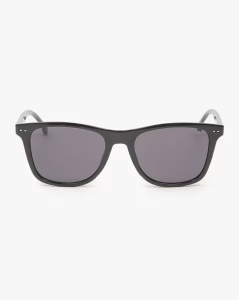


Wayfarer Sunglasses are versatile and easy to style.
They work particularly well for:
- Everyday wear
- College
- Travel
- Casual outfits
- Smart-casual looks
A classic black Wayfarer can easily become an everyday signature accessory.
Square Sunglasses


Square Sunglasses create a stronger, structured appearance.
They can work particularly well for people who want a bold contemporary look.
Rectangle Sunglasses


Rectangle Sunglasses offer a sharper and more understated aesthetic.
They can be excellent for professional wardrobes and modern minimalist styling.
Round Sunglasses


Round Sunglasses bring a vintage-inspired character to an outfit.
They are particularly useful if you want your eyewear to become a noticeable part of your personal style.
Oversized Sunglasses
Oversized Sunglasses make a stronger fashion statement and provide greater facial coverage.
They are particularly popular for fashion, travel and statement styling.
The key is proportion: the frame should complement your face rather than completely overwhelm it.
Clubmaster Sunglasses
Clubmaster designs combine a stronger upper frame with a lighter lower section.
They sit between classic and contemporary styling, making them useful for people who want something more distinctive than a conventional Wayfarer.
Rimless Sunglasses
Rimless Sunglasses offer a lightweight, minimalist appearance.
Because there is less visible frame structure, they can create a sophisticated and understated aesthetic.
Transparent Frames
Transparent Frames have become increasingly popular because they combine contemporary styling with visual lightness.
They are particularly easy to pair with neutral, pastel and casual wardrobes.
Choosing Sunglasses by Lifestyle
The “best” sunglasses change depending on what you actually do.
Sunglasses for Driving
For Sunglasses for Driving, prioritize:
- UV400 protection
- Polarization
- Comfortable fit
- Good peripheral coverage
- Clear, undistorted vision
Polarized lenses can be particularly helpful in reducing reflected glare from roads and other surfaces.
However, sunglasses designed for daytime should not be treated as night-driving eyewear.
Driving Sunglasses
Driving Sunglasses should balance glare reduction with appropriate light transmission.
Grey and brown lenses are popular choices because they can provide comfortable visual contrast without dramatically altering the appearance of colours.
For professional or long-distance drivers, lens quality and optical accuracy should take priority over purely cosmetic features.
Bike Riding Sunglasses
Bike Riding Sunglasses need to stay securely in place while protecting the eyes from:
- Wind
- Dust
- Bright sunlight
- Road debris
A lightweight, well-fitting frame with impact-resistant lenses can be a better choice than a heavy fashion frame.
Sunglasses for Cricket
Sunglasses for Cricket should be lightweight, secure and appropriate for bright outdoor conditions.
A sport-oriented frame with impact-resistant lenses and good peripheral coverage can be especially useful.
Avoid choosing sunglasses solely because they look sporty. Fit and optical performance matter more.
Sunglasses for Running
For Sunglasses for Running, weight and stability are critical.
Look for:
- Lightweight construction
- Secure nose fit
- Non-slip temples
- Impact-resistant lenses
- Adequate ventilation
The ideal running sunglasses should almost disappear from your awareness while you move.
Sunglasses for Cycling
Sunglasses for Cycling should provide wide coverage, secure fit and excellent glare management.
Wraparound or shield-style designs can provide more peripheral protection than traditional fashion frames.
Polycarbonate is particularly relevant for performance eyewear because of its impact resistance.
Sunglasses for Office
You may not think about sunglasses when dressing for work, but Sunglasses for Office commuting and outdoor transitions can still be part of a professional wardrobe.
Choose understated designs such as:
- Rectangle
- Clubmaster
- Classic Wayfarer
- Slim metal frames
- Minimal transparent frames
Neutral colours generally work best with formal clothing.
Sunglasses for Travel
Sunglasses for Travel should ideally be versatile enough to work with multiple outfits.
A great travel pair should be:
- Lightweight
- Durable
- Comfortable
- Easy to carry
- Suitable for long hours outdoors
A classic black or tortoiseshell Wayfarer, versatile square frame or Aviator can work exceptionally well.
Sunglasses for College Students
For Sunglasses for College Students, style and value are usually equally important.
Wayfarers, square frames, transparent frames, round sunglasses and contemporary rectangle designs are all versatile choices.
Instead of buying purely based on trends, choose something you can comfortably wear with multiple outfits.
Monsoon Sunglasses: Do You Need Them?
Absolutely.
Monsoon Sunglasses are useful because cloudy weather does not necessarily mean UV radiation disappears.
Monsoon conditions also introduce:
- Wet roads
- Reflected glare
- Water droplets
- Dust
- Humidity
- Sudden changes in brightness
Polarized lenses can be particularly useful where reflected glare becomes uncomfortable.
A water-repellent coating can also make lenses easier to maintain in wet conditions. Functional coatings are specifically designed to improve water and dirt repellency and ease cleaning.
Sunglass Frame Materials
Understanding Sunglass Frame Materials can help you make a better purchase.
Metal Frames
Metal frames offer a refined, classic appearance and are especially popular in Aviator and minimalist designs.
Acetate
Acetate is valued for its appearance, colour possibilities and premium feel.
Polycarbonate
Polycarbonate frames can offer lightweight construction and impact resistance, making them useful for active eyewear.
Nylon / Polyamide
Nylon-based materials are particularly useful when flexibility, lightness and complex frame designs are important.
TR-type performance materials
Flexible lightweight materials are commonly used in sport and active eyewear where durability and comfort are priorities.
The right material ultimately depends on whether you prioritize fashion, flexibility, durability, weight or performance.
How to Choose Sunglasses for Your Face Shape
Your face shape can dramatically change how a frame looks.
A useful general rule is to create contrast.
Round face
Try:
- Square
- Rectangle
- Clubmaster
Square face
Try:
- Round
- Aviator
- Softer shapes
Oval face
Most styles can work, including:
- Aviator
- Wayfarer
- Rectangle
- Round
Long face
Consider:
- Oversized
- Aviator
- Larger square frames
But remember: these are guidelines, not strict rules.
Fit matters more than a face-shape chart.
The frame should sit comfortably on the bridge, not pinch your temples, and should not slide down your nose during normal movement.
Buy Sunglasses Online: What Should You Check?
The convenience of Buy Sunglasses Online is undeniable. You can compare hundreds of designs without visiting multiple stores.
But online shopping requires more attention.
Before ordering, check:
1. Lens specifications
Look for explicit UV protection information.
2. Lens material
Check whether it is TAC, polycarbonate, nylon, glass or another material.
3. Frame measurements
Look for lens width, bridge width and temple length where available.
4. Return policy
A frame can look different on your face than it does in a product photograph.
5. Authenticity
Especially important when buying branded or designer eyewear.
6. Warranty
A useful indicator of the seller’s commitment to the product.
7. Product photography
Look closely at hinges, logos, lens finish and frame construction.
How to Find the Best Sunglasses Store
The Best Sunglasses Store isn’t simply the one with the largest collection.
Look for a store that provides:
- Genuine products
- Clear product specifications
- Reliable customer service
- Transparent pricing
- Good return/exchange policies
- Warranty information
- Multiple frame styles
- Multiple lens technologies
A specialist Premium Eyewear Store should ideally educate customers rather than simply push the most expensive product.
Authentic Sunglasses India: What Should Buyers Look For?
For people searching for Authentic Sunglasses India, authenticity should be one of the first considerations when purchasing branded eyewear.
Whether buying online or offline, check the retailer’s reputation and product documentation.
Be particularly careful with listings using phrases such as:
“Luxury quality”
“First copy”
“Imported copy”
“Same as original”
These phrases should not be confused with authentic branded eyewear.
If you want genuine premium eyewear, purchase through an established retailer or an authorized channel whenever possible.
Luxury Sunglasses Online and Designer Sunglasses Online
The growth of e-commerce has made Luxury Sunglasses Online and Designer Sunglasses Online more accessible than ever.
But premium eyewear is not simply about a recognizable logo.
Luxury eyewear can differentiate itself through:
- Materials
- Craftsmanship
- Lens technology
- Hardware
- Design
- Fit
- Finishing
- Brand heritage
If you are purchasing designer eyewear online, authenticity becomes particularly important.
The more expensive the product, the more important it becomes to know where it came from and who is selling it.
So, What Are the Best Sunglasses for Men?
There is no single pair that can honestly be called the best for every man.
Instead, think in terms of categories:
| Your requirement | Ideal choice |
|---|---|
| Everyday use | UV400 polarized sunglasses |
| Driving | Polarized UV400 |
| Cycling | Lightweight impact-resistant sports sunglasses |
| Running | Lightweight secure sports frame |
| Cricket | Lightweight performance sunglasses |
| Travel | Versatile Wayfarer/Aviator |
| College | Wayfarer, square or transparent frame |
| Office | Rectangle, Clubmaster or minimalist frame |
| Fashion | Oversized, round or statement frames |
| Premium style | Acetate/metal with quality lenses |
| Active lifestyle | Polycarbonate/nylon performance eyewear |
The important point is that lens technology, frame construction and fit should work together.
Final Buying Checklist
Before purchasing your next pair, ask yourself:
✓ Does it provide UV400 protection?
✓ Do I need polarization?
✓ Is the lens material suitable for how I use it?
✓ Is the frame comfortable?
✓ Does it stay secure when I move?
✓ Does the size suit my face?
✓ Are the lenses optically clear?
✓ Does the product have reliable specifications?
✓ Is the seller trustworthy?
✓ Is the product authentic?
✓ Does the style work with my wardrobe?
If the answer to all of these is yes, you are much more likely to have found a pair that you will actually enjoy wearing.
Final Thoughts: The Best Sunglasses Are the Ones You Will Wear
Sunglasses have evolved from being a simple summer accessory into an important combination of eye protection, technology and personal style.
The right pair could be a polarized Aviator for highway driving, a lightweight polycarbonate frame for cycling, a classic Wayfarer for everyday use, or a sophisticated Clubmaster for a professional wardrobe.
Don’t choose sunglasses simply because they are dark, expensive or fashionable.
Choose them because they protect your eyes, fit properly, perform for your lifestyle and make you feel confident wearing them.
And when you Buy Sunglasses Online, remember the golden rule:
Don’t just look at the frame. Look at what is behind the frame—the lens technology, materials, construction and authenticity.
That is what separates an ordinary pair of sunglasses from eyewear that is genuinely worth wearing.